
- English
- Español
- Português
- русский
- Français
- 日本語
- Deutsch
- tiếng Việt
- Italiano
- Nederlands
- ภาษาไทย
- Polski
- 한국어
- Svenska
- magyar
- Malay
- বাংলা ভাষার
- Dansk
- Suomi
- हिन्दी
- Pilipino
- Türkçe
- Gaeilge
- العربية
- Indonesia
- Norsk
- تمل
- český
- ελληνικά
- український
- Javanese
- فارسی
- தமிழ்
- తెలుగు
- नेपाली
- Burmese
- български
- ລາວ
- Latine
- Қазақша
- Euskal
- Azərbaycan
- Slovenský jazyk
- Македонски
- Lietuvos
- Eesti Keel
- Română
- Slovenski
- मराठी
- Srpski језик

How Do I Choose Bridal Lace That Looks Luxurious in Photos and Feels Comfortable All Day?
When I’m sourcing lace for wedding gowns, I focus on one thing first: how the fabric behaves in real life, not just how it looks on a swatch. That’s why I often end up discussing options with L&B when I need dependable quality and consistent supply for Bridal Lace projects. The right Bridal Lace should photograph beautifully, drape cleanly, and stay comfortable from ceremony to after-party.
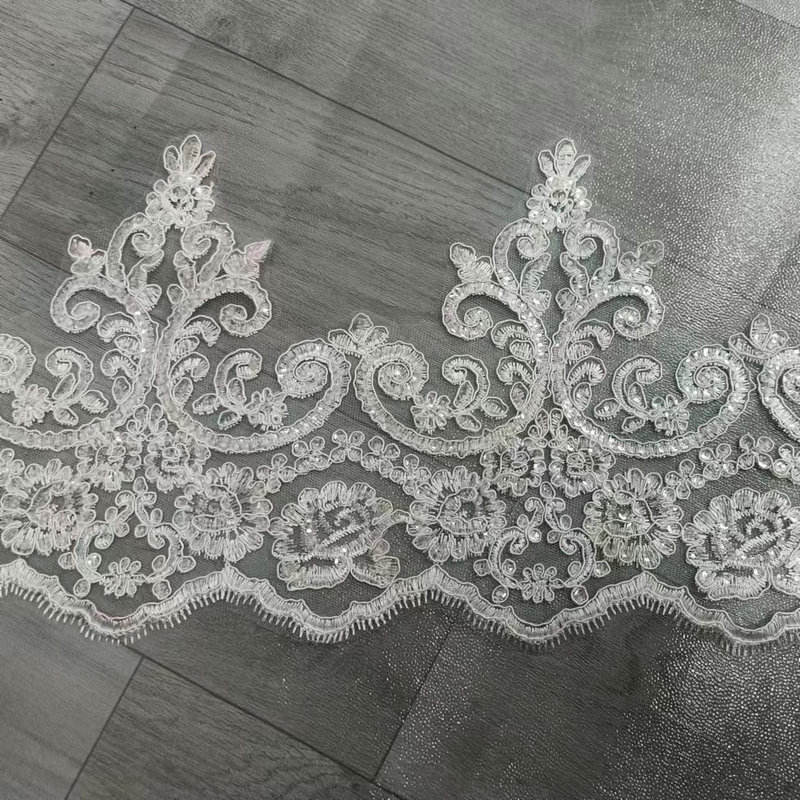
Why does Bridal Lace sometimes look “cheap” even when the pattern looks similar?
I’ve learned the hard way that two laces can share a similar motif, yet deliver completely different results on a finished dress. What changes the final look is the combination of thread definition, base structure, and finishing.
- Thread clarity and relief affect how the motif pops under sunlight and flash.
- Ground stability influences whether the lace ripples, bags out, or lays flat on bodices and sleeves.
- Edge precision matters for scallops and cutwork placements, especially on necklines and trains.
- Hand-feel determines whether it scratches sensitive areas like underarm seams or collarbones.
What problems should I solve first when buying Bridal Lace for dresses or veils?
Before I compare styles, I list the pain points that cause rework, returns, or rushed replacements. Getting these right upfront saves both time and budget, especially for custom orders.
- Color match between lace and lining or tulle (ivory vs off-white can clash on camera).
- Consistency across rolls so panels don’t shift in motif scale or tone.
- Comfort for long wear, especially for fitted sleeves and illusion bodices.
- Workability for appliqué cutting, repositioning, and clean stitching without fraying.
- Lead time reliability for production schedules and last-minute changes.
Which types of Bridal Lace work best for different gown areas?
I don’t treat Bridal Lace as “one fabric for everything.” Each area of a gown has different needs: structure, softness, or dramatic detail. Here’s how I typically map lace to function.
| Gown Area | What I Prioritize | Best-Fit Lace Traits | Common Mistake to Avoid |
|---|---|---|---|
| Bodice and corset panels | Stability and clean shape | Defined motifs, stable ground, minimal stretch | Overly soft lace that warps after steaming |
| Sleeves and neckline | Comfort and smooth contact | Soft touch, refined threads, flexible drape | Rough thread that irritates skin |
| Skirt overlays | Drape and movement | Lightweight, flowing, elegant repeat pattern | Heavy lace that makes the skirt look stiff |
| Veils | Airiness and clean edge detail | Fine ground, graceful scallops, balanced motif spacing | Motifs that look crowded from a distance |
| Appliqués and placements | Easy cutting and neat edges | Motifs that separate cleanly, low fray risk | Motifs that shred when cut |
How can I judge Bridal Lace quality quickly without relying on marketing words?
When I can’t visit a showroom, I use a simple evaluation checklist. It’s practical, repeatable, and it works for most Bridal Lace categories.
- Hold it up to light and check if the ground looks even and intentional rather than patchy.
- Rub test with fingertips to feel for scratchy threads that will bother the wearer.
- Gentle stretch check to see if the motif distorts or snaps back neatly.
- Edge inspection to confirm scallops and outlines are crisp and consistent.
- Steam behavior (if possible) to see whether it relaxes beautifully or becomes wavy.
What makes Bridal Lace a smart choice for brands that care about both style and margin?
From a business perspective, a strong Bridal Lace program reduces sampling risk and improves production efficiency. If the lace cuts cleanly, holds its shape, and arrives consistently, you spend less time fixing issues and more time delivering gowns that look premium.
- Faster sampling because the lace behaves predictably during cutting and stitching.
- Cleaner finish on photoshoots and runway because motifs read clearly on camera.
- Lower alteration risk since stable lace reduces warping on fitted areas.
- More design flexibility with options for overlays, scalloped edges, and appliqué placements.
How do I avoid common ordering mistakes with Bridal Lace?
Most avoidable problems happen before the lace even ships. This is the checklist I follow when I’m placing orders for Bridal Lace.
- Confirm the exact color name and compare against your lining/tulle under the same lighting.
- Ask for clear close-up images of motif edges, ground structure, and scallops.
- Verify usable width (not just nominal width) for pattern planning and yield calculations.
- Request lot consistency guidance if you expect reorders or phased production.
- Communicate end-use (veil vs bodice vs sleeve) so the recommended lace matches function.
Ready to source Bridal Lace that elevates your collection?
If you’re developing new gowns, refreshing a best-seller, or building a reliable lace supply for ongoing production, I recommend shortlisting a few styles and evaluating them against your real use cases (bodice, sleeves, veil, overlays). If you want suggestions tailored to your design concept, target price point, and production needs, contact us and tell us what you’re making. I’ll help you narrow down the right Bridal Lace options and move from sampling to bulk with confidence.