
- English
- Español
- Português
- русский
- Français
- 日本語
- Deutsch
- tiếng Việt
- Italiano
- Nederlands
- ภาษาไทย
- Polski
- 한국어
- Svenska
- magyar
- Malay
- বাংলা ভাষার
- Dansk
- Suomi
- हिन्दी
- Pilipino
- Türkçe
- Gaeilge
- العربية
- Indonesia
- Norsk
- تمل
- český
- ελληνικά
- український
- Javanese
- فارسی
- தமிழ்
- తెలుగు
- नेपाली
- Burmese
- български
- ລາວ
- Latine
- Қазақша
- Euskal
- Azərbaycan
- Slovenský jazyk
- Македонски
- Lietuvos
- Eesti Keel
- Română
- Slovenski
- मराठी
- Srpski језик

What Is Lace Fabric? Types, Materials and Common Applications
Lace fabric is a decorative textile with an openwork structure and patterned surface. It is used in clothing, lingerie, bridalwear, accessories, and other textile products. Depending on how it is made and the fibers used, lace can be soft and lightweight, elastic, relatively structured, or heavily decorated.
When choosing lace for garment production, the pattern is only one consideration. Material, construction, width, transparency, stretch, pattern density, and finishing can all affect how the lace looks and performs in the finished garment.
What Is Lace Fabric?
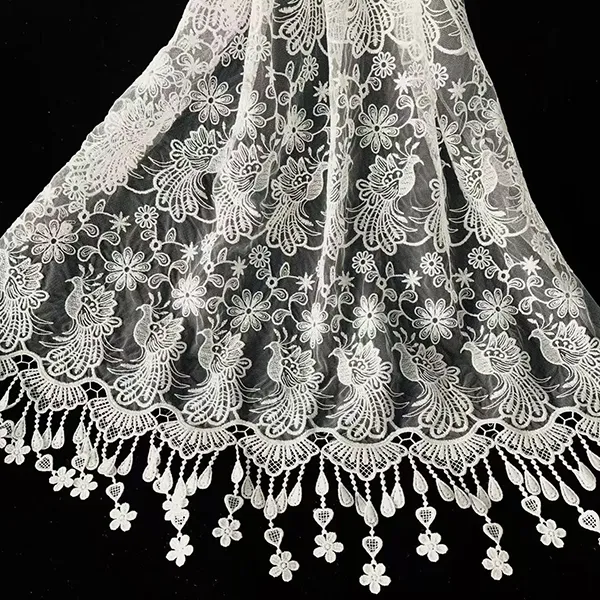
Lace fabric is made with decorative patterns that include open spaces, threads, embroidery, or a combination of different textile techniques. This gives lace its characteristic contrast between patterned areas and more transparent sections.
Modern lace is produced in many different constructions. Some styles use an embroidered mesh base, while others are made with connected motifs, elastic yarns, or additional decorative elements. Common materials include polyester, nylon, cotton, rayon, and fiber blends.
The choice of construction and material affects the final fabric. For example, elastic lace can stretch and recover for fitted garments, while a denser lace with embroidered or raised details can provide a more pronounced decorative effect.
Types and Materials
Lace is available in many forms, and the terminology can refer to either the construction method or the material used. Some common types include embroidery lace, guipure lace, chemical lace, water-soluble lace, elastic lace, cotton lace, and 3D lace.
Embroidery Lace
Embroidery lace combines embroidered patterns with a lace or mesh base. Floral, geometric, botanical, and other patterns can be produced, and the embroidery can cover part or most of the fabric surface.
It is often used for dresses, blouses, lingerie, bridalwear, and decorative garment panels. Custom patterns can also be developed from artwork or reference samples.
Guipure Lace
Guipure lace has relatively dense motifs connected without the conventional net background found in many other lace fabrics. The motifs tend to have a more defined outline, giving the material a distinctive and structured appearance.
It can be used for dresses, sleeves, collars, bridal garments, and decorative details.
Chemical and Water-Soluble Lace
Chemical lace is made by embroidering a pattern onto a temporary base and removing the base during processing. Water-soluble lace uses a water-soluble backing that is dissolved after embroidery. Both methods allow manufacturers to produce detailed patterns with relatively intricate shapes.
These lace types are often selected when a design calls for fine embroidery, isolated motifs, or a more open decorative structure.
Elastic Lace
Elastic lace contains stretch fibers or elastic yarns and is designed to provide flexibility and recovery. It is commonly found in lingerie, underwear, swimwear, fitted garments, and other products where the material needs to move with the garment.
Stretch percentage, recovery, softness, width, and edge construction should be checked when selecting elastic lace for production.
Cotton Lace
Cotton lace uses cotton as the main fiber and has a natural textile hand feel. It can be used in apparel, children's clothing, home textiles, and decorative products.
Compared with synthetic lace, cotton lace may behave differently during dyeing, washing, and finishing, so the fabric specifications should be considered together with the intended application.
3D Lace
3D lace adds raised elements to the surface through embroidery, layered motifs, appliqués, beads, sequins, or similar techniques. The added texture creates more visual depth than a flat lace pattern.
It is commonly found in bridalwear, eveningwear, fashion garments, and decorative accessories.
Common Lace Materials
| Material | Main Characteristics | Typical Uses |
|---|---|---|
| Polyester | Good dimensional stability and durability | Apparel, lace trim, embroidery lace, decoration |
| Nylon | Lightweight and flexible | Lingerie, underwear, fine lace |
| Cotton | Natural hand feel and textile appearance | Clothing, children's wear, home textiles |
| Rayon | Soft hand feel and flowing appearance | Fashion garments and decorative textiles |
| Blended Fibers | Combines properties of different fibers | Custom garment and textile applications |
Common Applications
Lace can be used as a main fabric, an overlay, an insert, or a decorative trim. The appropriate type depends on the construction and requirements of the finished product.
Apparel and Fashion
Lace is used in dresses, blouses, skirts, sleeves, collars, cuffs, and garment panels. It can cover an entire garment or be applied to selected areas to add pattern and texture.
Bridalwear
Bridal lace is used for wedding dresses, veils, sleeves, bodices, trains, and related accessories. Floral patterns, embroidery, raised motifs, beads, and other details can be combined to create different surface effects.
Lingerie and Underwear
Lightweight and elastic lace are frequently used for bras, panties, camisoles, nightwear, and similar products. For these applications, softness, stretch, recovery, and edge comfort are important alongside appearance.
Accessories and Home Textiles
Lace is also used for collars, cuffs, decorative strips, hair accessories, bags, gloves, curtains, table decorations, cushions, and other textile products. The material and construction should be selected according to the expected handling, washing, and durability requirements.
How to Choose Lace Fabric for Production
The right lace depends on the finished product rather than the pattern alone. Before ordering, manufacturers and designers should confirm several basic specifications.
- Material: Check whether polyester, nylon, cotton, rayon, or a blended fiber is appropriate for the garment.
- Construction: Determine whether embroidery lace, elastic lace, guipure lace, 3D lace, or another construction fits the design.
- Width: Confirm the required width and pattern repeat, especially when the lace will be used for garment cutting.
- Stretch: For elastic lace, check stretch and recovery against the requirements of the finished garment.
- Transparency: Consider whether the lace will be used alone, over a lining, or together with another fabric.
- Color and finishing: Confirm the required color, surface finish, and color consistency when the lace needs to match other garment materials.
For custom lace, a reference sample, drawing, artwork, or pattern information can help define the required construction. Before bulk production, it is useful to confirm the approved sample, material composition, width, color, pattern, packaging, and other agreed specifications.
Lace Fabric and Lace Trim: What Is the Difference?
Lace fabric is generally supplied in a wider format and can be cut into garment panels or used as an overall fabric. Lace trim is usually narrower and is intended for edges, hems, seams, collars, cuffs, or other decorative areas.
The two products can have similar patterns but serve different production purposes. A garment requiring a full lace panel may need lace fabric, while a product that only needs decorative edging may require lace trim or a lace border.
Choosing Lace for Different Garment Requirements
There is no single lace fabric that works for every garment. Lightweight lace may be preferred for delicate apparel, elastic lace for fitted products, cotton lace for applications where a natural fiber is required, and more structured or embellished lace for bridal and formalwear.
For custom projects, the final garment, fabric construction, pattern, dimensions, color, and production volume should be considered together. Reviewing a physical sample before bulk production can also help confirm the appearance and handling of the finished lace.
L&B supplies different types of lace fabric and lace trims for apparel and textile applications. Customers can provide a reference sample, design, or product requirements for discussion of the appropriate lace construction and specifications.